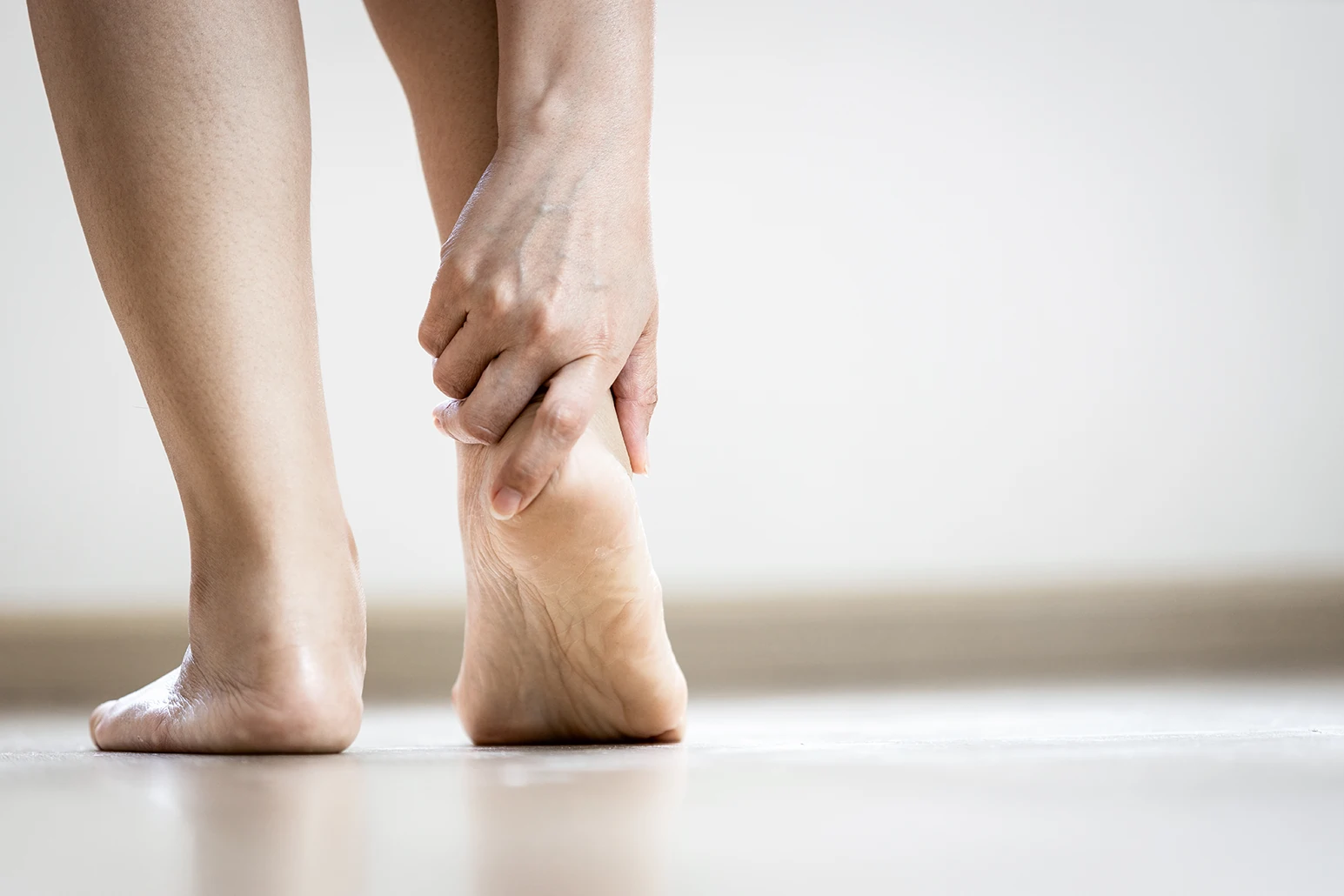
7 Causes of Numbness in Adults
Numbness might seem harmless at first—brief, painless, and easy to ignore. But when it sticks around or shows up out of nowhere, it can leave you asking, “What’s really going on?” Sometimes it’s just from sitting too long. Other times, it’s your body’s quiet way of waving a red flag that something deeper needs your attention.
That’s why it’s helpful to know what’s behind it. Understanding the causes gives you the power to spot real problems early and keep your nerves in good shape.
So, what’s your body trying to tell you? Read on to find out.
What Causes Numbness?
Here’s what could be behind that loss of sensation
- Inactivity
Maybe it’s time to get moving! Staying in one position for too long—whether sitting at your desk, crossing your legs, or sleeping with your arm tucked under your head—can put pressure on nerves or restrict blood flow.1,2 That’s when you experience that weird “Where’s my leg?” feeling. Usually, it’s nothing to worry about and goes away as soon as you move and get your blood flowing again. - Poor Circulation
The body’s circulatory system is a complex network that tirelessly works to keep every cell nourished and healthy.3 When your blood vessels are functioning smoothly, oxygen and essential nutrients are delivered efficiently throughout your body. But when something interrupts this flow—like a narrowed artery or a blood clot—blood circulation can become compromised. This often leads to uncomfortable sensations such as numbness or tingling, particularly in the hands and feet.3 - Dehydration
Numbness usually isn’t caused by dehydration alone. However, when dehydration is severe, it can lead to imbalances in electrolytes and vitamins that are vital for nerve health. These imbalances can cause symptoms like tingling and numbness, known as paresthesia.4 Electrolytes include essential minerals like calcium, potassium, sodium, and magnesium.5 - Stress
Ever notice your hands or feet go numb when you’re feeling stressed? That’s because your body switches into “fight or flight” mode. Hormones like adrenaline surge through your bloodstream, sending more blood to vital organs like your brain and heart.6 While this is great for responding to danger, it means other body parts like your hands, feet, or even your face might get less blood flow temporarily. This reduced circulation can cause those strange, vibrating sensations.6 - Nerve Compression
Nerve compression happens when nearby tissues—like muscles, bones, or discs—put too much pressure on a nerve.7 A common example is sciatica, where a nerve in your lower back gets compressed, often causing numbness, tingling, or pain that travels down one leg.8 You can also experience nerve compression in your neck, wrists, or elbows. While many cases are mild and temporary, severe or prolonged compression can lead to more serious complications. In rare cases, if the pressure isn’t relieved, it can damage the nerve enough to cause muscle weakness or even partial paralysis in the affected area.9 - Neuropathy
Neuropathy is one of the most common causes of numbness.10 It occurs when nerves are damaged or not functioning properly, affecting the communication between the brain, spinal cord, and the rest of the body.10 Symptoms can vary widely depending on the type and severity of the nerve damage. Alongside numbness and tingling, individuals may also experience pain, muscle weakness, and reduced or absent deep tendon reflexes (automatic muscle responses).10 - Vitamin B Deficiency
If you’re low on B vitamins like B1, B6, or B12, your nerves might struggle to send signals the right way. That’s when you might begin to experience a prickling sensation. Here’s how each type of B vitamin deficiency increases your risk of developing numbness.- Vitamin B1: Prolonged vitamin B1 deficiency can lead to a loss of sensation in the extremities.11
- Vitamin B6: A deficiency in vitamin B6 is associated with several health issues, including anemia and nerve-related conditions such as peripheral neuropathy.12 Symptoms can vary but often include tingling or a “pins and needles” feeling in the hands and feet.13 Some people may also experience muscle weakness, pain, or trouble walking. In severe cases, balance and coordination can be affected.13
- Vitamin B12: When someone doesn't get enough B12, their body can't make myelin correctly.14 This deficiency leads to damage in the protective nerve covering, especially in the spinal cord. The result can be a condition called subacute combined degeneration (SCDC), which affects how the spinal cord works.14 People with this condition may experience sensory ataxia (balance problems), muscle stiffness, and nerve pain or weakness.14
What You Can Do Next
Numbness can come and go depending on its cause. Sometimes it gets better without treatment, but other times it lingers. Fortunately, with the right care, you can help keep it under control. Adopting healthy habits like staying active and maintaining a balanced diet can help support your nerves and reduce numbness.
And to be even more proactive, consider supporting your nerve health from the inside out. Taking B vitamins often helps, as they play a key role in proper nerve function. If you're thinking about supplements, Vitamin B1 + B6 + B12 (Pharex® B-Complex) could be a great option.
B Vitamins Versus Numbness
Vitamin B1+B6+B12 (Pharex® B-Complex) contains the right levels of vitamins B1(100mg), B6 (5mg), and B12 (50mcg)—essential vitamins that help prevent neuropathy symptoms like pangangalay, pamamanhid, and tusok-tusok.15
Not only does Vitamin B1+B6+B12 (Pharex® B-Complex) support nerve health, but it also helps give the energy boost needed for daily activities to help you stay active, stay healthy, and stay Pharexcited every day!
Note: Vitamin B supplements are generally safe when taken within recommended dosages. It is important to be mindful of potential interactions, individual tolerance, and the need for personalized guidance based on specific health conditions.
If symptoms persist, consult your doctor.
References:
- 1 Professional, C. C. M. (2025, March 19). Numbness. Cleveland Clinic. https://my.clevelandclinic.org/health/symptoms/21015-numbness
- 2 Neuropathic Therapy Center. (2018, June 12). 5 ways sitting is killing your nerves. Loma Linda University Health. Retrieved July 25, 2025, from
https://lluh.org/services/neuropathic-therapy-center/blog/5-ways-sitting-kill ing-your-nerves - 3 Poor circulation. (2025, March 19). Cleveland Clinic. https://my.clevelandclinic.org/health/diseases/21882-poor-circulation
- 4 Professional, C. C. M. (2025b, May 15). Paresthesia. Cleveland Clinic. https://my.clevelandclinic.org/health/symptoms/24932-paresthesia
- 5 Professional, C. C. M. (2025b, April 25). Electrolyte imbalance. Cleveland Clinic. https://my.clevelandclinic.org/health/symptoms/24019-electrolyte-imbalance
- 6 Chu, B., Marwaha, K., Sanvictores, T., & others. (2024, May 7). Physiology, stress reaction. In StatPearls. StatPearls Publishing. https://www.ncbi.nlm.nih.gov/books/NBK541120/
- 7 Pinched nerve. (2024, December 19). Cleveland Clinic. https://my.clevelandclinic.org/health/diseases/6481-pinched-nerves
- 8 Davis, D., Taqi, M., & Vasudevan, A. (2024, January 4). Sciatica. StatPearls - NCBI Bookshelf. https://www.ncbi.nlm.nih.gov/books/NBK507908/
- 9 McNicholas, P. (2023, October 3). Spinal cord compression can lead to paralysis. McNicholas & McNicholas, LLP. https://www.mcnicholaslaw.com/spinal-cord-compression-can-lead-to-par alysis/
- 10 Hammi, C., & Yeung, B. (2022). Neuropathy. In StatPearls. StatPearls Publishing. https://pubmed.ncbi.nlm.nih.gov/31194377/
- 11 Wiley, K. D., & Gupta, M. (2023, July 17). Vitamin B1 (Thiamine) deficiency. StatPearls - NCBI Bookshelf. Min https://www.ncbi.nlm.nih.gov/books/NBK537204/
- 12 Muhamad, R., Akrivaki, A., Papagiannopoulou, G., Zavridis, P., & Zis, P. (2023). The Role of Vitamin B6 in Peripheral Neuropathy: A Systematic Review. Nutrients, 15(13), 2823. https://doi.org/10.3390/nu15132823 Retrieved from: https://www.mdpi.com/2072-6643/15/13/2823
- 13 Pauls, K. (2024). Unveiling the connection: Vitamin B6 and its impact on peripheral neuropathy. Vitam Miner, 13, 295.
https://www.hilarispublisher.com/open-access/unveiling-the-connection-vit amin-b6-and-its-impact-on-peripheral-neuropathy.pdf - 14 Umekar, M., Premchandani, T., Tatode, A., Qutub, M., Raut, N., Taksande, J., & Hussain, U. M. (2025). Vitamin B12 deficiency and cognitive impairment: A comprehensive review of neurological impact. Brain Disorders, 18, 100220. https://www.sciencedirect.com/science/article/pii/S266645932500040X
- 15 Vitamin B1+B6+B12 (Pharex® B-Complex) Product Information Leaflet. Date of Revision April 2023.

Let your circle know about this article


Learn when is the best time to take Vitamin B Complex supplements, and other dos and don'ts about it with this read.


Alam mo ba na ang working habits ay pwedeng maging sanhi ng sakit sa nerves? Alamin kung bakit ito nangyayari at anong pwedeng gawin para maiwasan ang mga ito.
Don't let the annoying tingling sensation in your hands and feet slow you down. Here are 6 tips to help you with the discomfort.

Early intervention can help prevent long-term nerve damage. But how can you tell if your nerves are damaged? Find out before it’s too late with this read.

In 1987, Pharex then shifted to marketing and distributing generic products, while appointing Metro Drug as its exclusive brand distributor. This move proved to be timely because of the passing of the Generics Act of 1988. Many successful years followed, and in 2016, Pharex was acquired by RiteMED Inc. Even after more than 35 years in the industry, Pharex remains committed to empowering Filipino families by providing them with top-notch healthcare solutions.
More on Pharex here

27th Floor Greenfield Tower, Mayflower St. Corner Williams St., Highway Hills, Mandaluyong City


For other questions, please contact us at (02) 7971-3333 or at productsafetyph@pharexhealth.com
