
Did You Know that Nutrient Absorption Declines With Age?
The body is powered by many vitamins, minerals, and nutrients that not only ensure proper function but also help in its overall survival and nutrient uptake. Think of these as components of a battery pack that can supercharge the body and make it even more powerful and efficient.
Some essential micronutrients typically come from healthy and nutritious foods and/or high-quality supplements that are absorbed by the body in a well-organized process to ensure they go where they’re needed.
However, there may come a time when the body is unable to absorb and synthesize essential micronutrients from food effectively, and this can result in nutrient deficiencies and health complications. Sadly, one group that’s prone to these health problems would be the elderly because many changes can happen in their body as they age.
Take note of the changes in the aging digestive system that can decrease food and nutrient absorption, and what can be done to prevent these health issues from worsening.
How Digestion Changes Contribute to Nutrient Absorption Decline in Seniors
You may wonder: At what age does digestion slow down in the elderly? According to research, age-related changes in digestion can begin as early as 40 years old, although some signs tend to become more pronounced once someone reaches 75 years old. These digestion-related changes can ultimately cause a decline in the body’s ability to absorb nutrients, potentially triggering symptoms like:1
- Abdominal pain
- Bloating
- Gas
- Nausea
- Vomiting
- Diarrhea
- Fatty stools
Some digestion-related factors that can contribute to the decline of nutrient absorption in the body among elderly people include:2,3
- Reduced perception or feelings of hunger
- Reduced secretion of gastric acid that may limit vitamin B12 and/or iron absorption
- Reduced production of saliva, which can slow down the chewing and breakdown of food
- Reduced sense of smell and/or taste that makes food less appetizing to eat and alters eating habits
- Higher levels of anorexigenic hormones or substances that reduce appetite and increase feelings of fullness
- Decreased production of digestive enzymes responsible for breaking down fats, proteins, and carbohydrates4,5
The bottom line is that these factors may cause the elderly to eat less food, thereby reducing their chances of obtaining the necessary nutrients and setting the stage for potential health complications.
Are Gastrointestinal Diseases or Issues Also to Blame for a Lack of Nutrients?
Some digestive system problems that may be common or noticeable in the elderly can also make it difficult for the body to absorb nutrients from food. Examples include:1
- Malabsorption: This occurs when the body is unable to absorb nutrients from food effectively.1 It can be triggered by diseases such as exocrine pancreatic insufficiency, small intestinal bacterial overgrowth (SIBO), Crohn’s disease, and cystic fibrosis, among others.6 Sadly, research has shown that the elderly are very prone to malabsorption.7
- Atrophic gastritis: This refers to inflammation of the stomach lining triggered by the Helicobacter pylori bacteria.8 Elderly people with this inflammation often have reduced stomach acid, elevated levels of harmful bacteria in the stomach and small intestine, and higher stomach pH levels. In the long run, the lack of stomach acid can reduce the absorption of nutrients like iron, beta-carotene, calcium, folic acid, and vitamin B12.9
- Presence of harmful bacteria in the gut: As seniors age, the composition of bacteria in the gut microbiome changes — and not exactly for the better. Researchers noted that the gut microbiomes of elderly people tend to be less “diverse” or don’t contain a good mix of beneficial bacteria. This leads to reduced production of good bacteria, inflammation within the body, and a higher risk for undernutrition, diseases, frailty, or even comorbidity.10
What Happens if Nutrient Absorption Continuously Declines?
If any of the earlier-mentioned problems related to nutrient absorption in the elderly aren’t addressed, these can spiral into a major health issue, such as malnutrition. Seniors who may be dealing with malnutrition suffer from weight loss, reduced muscle mass, and low body mass index (BMI) values and also develop a higher risk for the following health issues:2,11
- Reduced absorption of nutrients like iron, vitamins B12 and D, and calcium that may progress to nutrient deficiencies
- Dementia and delirium
- Depression
- Incontinence
- Wound healing problems
- Hearing problems
- Frailty, thus increased risk for falls and preventable hospitalizations and/or surgical procedures
- Immune dysfunction, increasing susceptibility to infections and slower recovery time
- Hospitalization-related deaths
What Can Be Done to Stop Nutrient Absorption Decline in the Elderly?
The road to improved nutrient absorption in the elderly starts with a diet made up of nutrient-dense food. However, since some seniors may also suffer from other health problems or extreme nutrient deficiencies, it’s ideal to talk to a doctor and a nutritionist or dietitian. They can analyze the patient’s medical history, determine which nutrients the elderly are most deficient in, and suggest food and/or supplements that can serve as sources for the nutrients.12
One possible strategy doctors can recommend to elderly patients at risk for or who are already struggling with nutrient absorption declines would be digestive enzyme supplementation. These provide an exogenous source of digestive enzymes like amylase, lipase, and protease, which help break down carbohydrates, fats, and protein, respectively.13
More importantly, senior citizens are one of the highest-risk groups for a digestive enzyme deficiency.14 This is why one shouldn’t miss out on the opportunity to talk to a doctor about digestive enzyme products like Enzymax Forte®.
Unlike other digestive enzyme supplements, Enzymax Forte® has a capsule-inside-capsule technology that helps promote targeted enzyme delivery to both the stomach and intestines while assisting in addressing signs of a digestive enzyme deficiency or imbalance.15
Enzymax Forte® is available online and in leading drugstores nationwide at a suggested retail price (SRP) of Php48.00 per capsule and Php960.00 per box of 20 capsules.
MAHALAGANG PAALALA: ANG ENZYMAX FORTE® AY HINDI GAMOT AT HINDI DAPAT GAMITING PANGGAMOT SA ANUMANG URI NG SAKIT.
- Malabsorption. (2025, June 2). Cleveland Clinic. Retrieved September 23, 2025, from https://my.clevelandclinic.org/health/diseases/22722-malabsorption#symptoms-and-causes
- Kassis, A., Fichot, M., Horcajada, M., Horstman, A. M. H., Duncan, P., et al. (2023). Nutritional and lifestyle management of the aging journey: A narrative review. Frontiers in Nutrition, 9. https://doi.org/10.3389/fnut.2022.1087505
- Amarya, S., Singh, K., & Sabharwal, M. (2015). Changes during aging and their association with malnutrition. Journal of Clinical Gerontology and Geriatrics, 6(3), 78–84. https://doi.org/10.1016/j.jcgg.2015.05.003
- Bruni, A., Colecchia, L., Dell’Anna, G., Scalvini, D., Mandarino, F. V., et al. (2025). Nutritional management in chronic pancreatitis: From exocrine pancreatic insufficiency to precision therapy. Nutrients, 17(17), 2720. https://doi.org/10.3390/nu17172720
- Basile, E. J., Launico, M. V., & Sheer, A. J. (2023, October 28). Physiology, nutrient absorption. StatPearls - NCBI Bookshelf. https://www.ncbi.nlm.nih.gov/books/NBK597379/
- Lenti, M. V., Hammer, H. F., Tacheci, I., Burgos, R., Schneider, S., Foteini, A., et al. (2025). European Consensus on Malabsorption—UEG & SIGE, LGA, SPG, SRGH, CGS, ESPCG, EAGEN, ESPEN, and ESPGHAN: Part 2: Screening, Special Populations, Nutritional Goals, Supportive Care, Primary Care Perspective. United European Gastroenterology Journal. https://www.espen.org/images/files/Guidelines/United_European_Gastroenterology_Journal-2025-Lenti_2.pdf
- Holt, P. R. (2001). Diarrhea and malabsorption in the elderly. Gastroenterology Clinics of North America, 30(2), 427–444. https://doi.org/10.1016/s0889-8553(05)70189-8
- Atrophic gastritis. (2025, June 2). Cleveland Clinic. Retrieved September 22, 2025, from https://my.clevelandclinic.org/health/diseases/24217-atrophic-gastritis
- Russell, R. M. (2001). Factors in aging that affect the bioavailability of nutrients. Journal of Nutrition, 131(4), 1359S–1361S. https://doi.org/10.1093/jn/131.4.1359s
- Cristina, N. M., & Lucia, D. (2021). Nutrition and healthy aging: Prevention and treatment of gastrointestinal diseases. Nutrients, 13(12), 4337. https://doi.org/10.3390/nu13124337
- Norman, K., Haß, U., & Pirlich, M. (2021). Malnutrition in older adults—Recent advances and remaining challenges. Nutrients, 13(8), 2764. https://doi.org/10.3390/nu13082764
- Kaur, D., Rasane, P., Singh, J., Kaur, S., Kumar, V., et al. (2019). Nutritional interventions for elderly and considerations for the development of geriatric foods. Current Aging Science, 12(1), 15–27. https://doi.org/10.2174/1874609812666190521110548
- Denhard, M., MS, RD, LLN. (2024, June 20). Digestive enzymes and digestive enzyme supplements. Johns Hopkins Medicine. Retrieved September 22, 2025, from https://www.hopkinsmedicine.org/health/wellness-and-prevention/digestive-enzymes-and-digestive-enzyme-supplements
- Löhr, J., Panic, N., Vujasinovic, M., & Verbeke, C. S. (2018). The ageing pancreas: A systematic review of the evidence and analysis of the consequences. Journal of Internal Medicine, 283(5), 446–460. https://doi.org/10.1111/joim.12745
- Enzymax Forte™ Company Core Data Sheet. Date of Revision: 07 Jan 2023.

Let your circle know about this article


Did you know that factors like nutrient deficiencies and even health issues can cause sudden weight loss among senior citizens? Take a closer look here.


Digestive enzymes help break down food, but it offers so much more! Find out how they can help improve digestion, energy, and metabolism.

Feeling drained even after eating carbohydrates? It's likely because your body isn't fully breaking them down. Find out how digestive enzymes can help you.
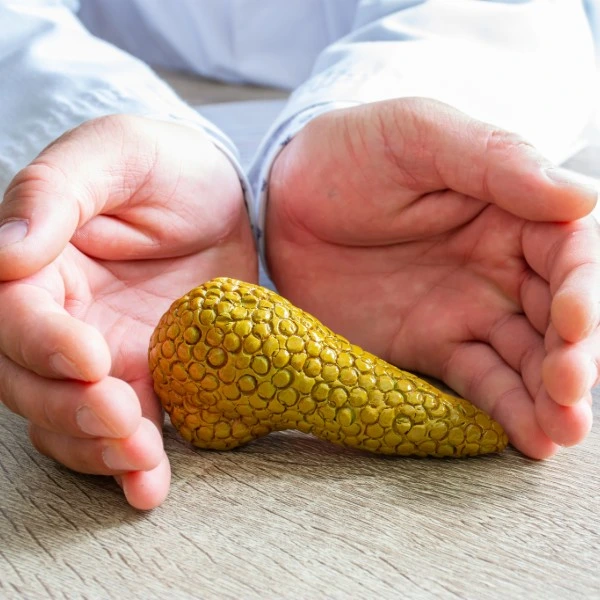
It’s possible to live without a pancreas, but it requires lifelong insulin and enzyme replacement. Learn what changes to expect and how to manage them.

In 1987, Pharex then shifted to marketing and distributing generic products, while appointing Metro Drug as its exclusive brand distributor. This move proved to be timely because of the passing of the Generics Act of 1988. Many successful years followed, and in 2016, Pharex was acquired by RiteMED Inc. Even after more than 35 years in the industry, Pharex remains committed to empowering Filipino families by providing them with top-notch healthcare solutions.
More on Pharex here

27th Floor Greenfield Tower, Mayflower St. Corner Williams St., Highway Hills, Mandaluyong City


For other questions, please contact us at (02) 7971-3333 or at productsafetyph@pharexhealth.com
