
Surprising Ways Your Diabetes is Affecting Your Digestion
When you think about diabetes complications, your mind probably jumps to things like nerve damage or problems with your eyesight. But did you know it can also affect your digestion?
If you’ve ever felt uncomfortable, bloated, or constipated after a meal, you’re far from alone. Lots of people with diabetes experience these issues, and understanding why can really help you feel more in control.
Here's a simple guide to understanding how diabetes affects digestion.
About Your Digestive System
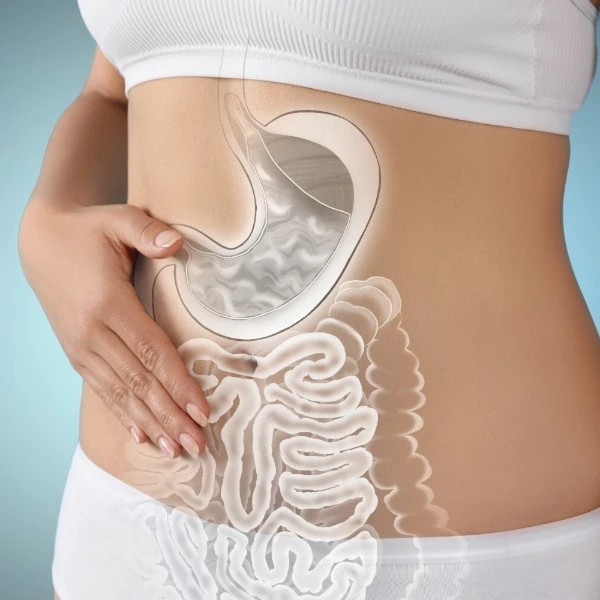
Every bite you take of your food sets off a chain reaction. After chewing, the food travels down your esophagus, which uses wave-like muscle movements (called peristalsis) to push it into your stomach.1 There, your stomach releases acid and enzymes to break the food down even further.1 From there, the partially digested food moves into your small intestine, where it’s transformed into a more fluid form so nutrients can be absorbed.1
Your pancreas, liver, and gallbladder all jump in to help.1 The pancreas and liver send digestive juices, and the gallbladder adds bile to break down fats.1 Once your body has taken in all the nutrients it needs, the leftovers move to your large intestine.1
However, when you have diabetes, chronic high blood sugar can interfere with this system.
It’s very common for people with diabetes to experience digestive issues.2 Symptoms like acid reflux, bloating, nausea, constipation, diarrhea, and even trouble controlling bowel movements (called fecal incontinence) are reported by many.2 Research also suggests that more than half of the people who visit outpatient diabetes clinics may experience at least one of these gastrointestinal symptoms at some point.2
So, how does Diabetes affect digestion? Find out here.
1. Esophageal Issues
When your blood sugar is poorly controlled, it can slow down how your esophagus moves food.2 It can also weaken the muscle at the bottom of your esophagus (called the lower esophageal sphincter).2 This muscle is important because it helps keep food and stomach acid from coming back up.2
So why does this happen? One theory suggests that diabetes can affect the vagus nerve and can lower levels of the neurotransmitter acetylcholine, both of which are crucial for the proper functioning of the esophagus.3 Moreover, one study even reported that about two-thirds of people with diabetes had thicker-than-normal esophageal muscles.2
2. Slowed Stomach Emptying (Gastroparesis)
Gastroparesis is a condition where the stomach doesn't empty food as quickly as it should.3 Normally, after you eat, your stomach contracts to push food into the small intestine so your body can absorb nutrients. But in gastroparesis, this process slows down, not because of a blockage or physical obstruction, but because the stomach muscles and nerves aren’t working as they should.3
When gastroparesis is caused by diabetes, it’s called diabetic gastroparesis. Chronic high blood sugar or hyperglycemia can damage the autonomic nervous system, which controls digestion.3 It can also affect certain specialized cells in the stomach (called interstitial cells of Cajal, or ICCs), which act like timekeepers to keep food moving.3 When these systems are disrupted, food sits in the stomach longer than it should.3
3. Reduced Digestive Enzyme Production
The pancreas plays a dual role in the body.4 First, it produces insulin to regulate blood sugar.4 Second, it secretes digestive enzymes (like amylase, lipase, and protease) to help break down carbohydrates, fats, and proteins.4
In people with diabetes, the pancreas may become damaged or inflamed. This can lead to exocrine pancreatic insufficiency (EPI), where the pancreas fails to produce enough digestive enzymes.5 Over time, inadequate digestion can also lead to deficiencies in essential micronutrients, particularly the fat-soluble vitamins A, D, E, and K. If left unchecked, these deficiencies may contribute to unintended weight loss and malnutrition.
4. Gut Problems
When food stays too long in your stomach or small intestine, which can happen in people with diabetes, it gives bacteria more time to grow where they shouldn’t. Normally, food moves through your system steadily, but when things slow down, those extra bacteria can start feeding on what you’ve eaten.6 This can lead to gas, bloating, and even diarrhea.6
5. Unintended Weight Loss
When your cells don’t get the glucose they need, your body thinks it’s running out of fuel.7 To make up for it, it starts breaking down fat and muscle for energy, which can lead to sudden, unexplained weight loss, even if you're eating normally, especially in uncontrolled diabetes.7
What Can You Do?
The good news is, you don’t have to just accept digestive problems as part of living with diabetes. Here are some things you can try:8
- Adding more fiber-rich foods like veggies, fruits, whole grains, and beans to your meals is an easy and delicious way to help keep your blood sugar steady and support a healthy gut.
- Choose easy-to-digest foods. Some foods are gentler on your stomach. Think cooked veggies instead of raw, lean proteins, and avoid fatty or fried foods.
- Eat smaller, more frequent meals. Instead of three big meals, try eating five or six smaller ones throughout the day. This can help make digestion easier and prevent that heavy, bloated feeling.
- Stay active! Light exercise, like walking after meals, can help keep your digestive system moving.
- Keep track of symptoms and eating habits. Writing down what you eat and how you feel can help you and your doctor figure out what works best for you.
- In some cases, digestive enzyme supplementation may be recommended. However, these should only be used under medical supervision to make sure they are right for your individual needs.
You may also want to consider digestive enzyme supplements like Enzymax Forte®. This supplement is the only digestive enzyme product in the country, with an innovative capsule-inside-capsule dual-site release system. As a result, this two-in-one supplement helps deliver much-needed digestive enzymes to both the stomach and the intestines.9
Enzymax Forte® is used to aid in functional indigestion due to digestive enzyme deficiency or imbalance, manifesting as dyspepsia and/or flatulence.9
Symptoms of functional indigestion may occur among the following groups of people:10, 11
- Elderly people
- People with gallbladder issues
- People with diabetes
- People with pancreatic disorders who need to undergo pancreatic enzyme replacement therapy (PERT)
- People who practice prolonged fasting
You can find a total of eight digestive enzymes in this supplement, all of which assist with breaking down certain components from the food you eat:9
- Lipase: helps digest fat
- Amylase and Glucoamylase: help digest carbohydrates
- Alpha Galactosidase: helps digest carbohydrates and reduce gas in the stomach
- Protease 3.0, Protease 4.5, Protease 6.0, and Neutral Bacteria Protease: help digest proteins that can thrive in different pH level environments throughout the body
Struggling with digestion and diabetes? Ask your healthcare provider about Enzymax Forte® and give your gut some love!
MAHALAGANG PAALALA: ANG ENZYMAX FORTE® AY HINDI GAMOT AT HINDI DAPAT GAMITING PANGGAMOT SA ANUMANG URI NG SAKIT.
- Professional, C. C. M. (2025, April 25). Digestive system. Cleveland Clinic. Retrieved January 15, 2026, from https://my.clevelandclinic.org/health/body/7041-digestive-system
- Marathe, C. S., Rayner, C. K., Wu, T., et al. (2024, February 22). Gastrointestinal Disorders in Diabetes. Endotext [Internet]. https://www.ncbi.nlm.nih.gov/books/NBK553219/
- Aswath, G. S., Foris, L. A., Ashwath, A. K., et al. (2023, March 27). Diabetic gastroparesis. StatPearls. https://www.ncbi.nlm.nih.gov/books/NBK430794/
- Professional, C. C. M. (2025, March 19). Pancreas. Cleveland Clinic. Retrieved January 15, 2026, from https://my.clevelandclinic.org/health/body/21743-pancreas
- Exocrine pancreatic insufficiency (EPI). (2025, July 30). Cleveland Clinic. Retrieved January 15, 2026, from https://my.clevelandclinic.org/health/diseases/21577-exocrine-pancreatic-insufficiency-epi
- Rana, S. V., Malik, A., Bhadada, S. K., et al. (2017). Malabsorption, Orocecal Transit Time and Small Intestinal Bacterial Overgrowth in Type 2 Diabetic Patients: A Connection. Indian Journal of Clinical Biochemistry, 32(1), 84–89. https://doi.org/10.1007/s12291-016-0569-6
- What you should know about unexplained weight loss and diabetes. (2022, January 24). Cleveland Clinic. Retrieved January 15, 2026, from https://health.clevelandclinic.org/what-you-should-know-about-unexplained-weight-loss-and-diabetes
- Good foods to help your digestion. (2025, July 7). NHS.uk. Retrieved January 15, 2026, from https://www.nhs.uk/live-well/eat-well/digestive-health/good-foods-to-help-your-digestion/
- Enzymax Forte® Company Core Data Sheet. Date of Revision 07 Jan 2023
- Ullah, H., Di Minno, A., Piccinocchi, R., et al. (2023). Efficacy of digestive enzyme supplementation in functional dyspepsia: A monocentric, randomized, double-blind, placebo-controlled, clinical trial. Biomedicine & Pharmacotherapy, 169, 115858. https://doi.org/10.1016/j.biopha.2023.115858
- Ianiro, G., Pecere, S., Giorgio, V., et al. (2016). Digestive enzyme supplementation in gastrointestinal diseases. Current Drug Metabolism, 17(2), 187–193. https://doi.org/10.2174/138920021702160114150137

Let your circle know about this article


Why is functional indigestion (di matunawan) a common issue for seniors and diabetics? Here’s what might be behind their digestive problems


Digestive enzymes help break down food, but it offers so much more! Find out how they can help improve digestion, energy, and metabolism.

Problems in digesting fats can lead to discomfort. Discover the causes and what steps you can take to help improve fat breakdown.
Haven't heard of lipase before? Don't worry; this guide will help you learn about this digestive enzyme's purpose in the body and where to get it.

In 1987, Pharex then shifted to marketing and distributing generic products, while appointing Metro Drug as its exclusive brand distributor. This move proved to be timely because of the passing of the Generics Act of 1988. Many successful years followed, and in 2016, Pharex was acquired by RiteMED Inc. Even after more than 35 years in the industry, Pharex remains committed to empowering Filipino families by providing them with top-notch healthcare solutions.
More on Pharex here

27th Floor Greenfield Tower, Mayflower St. Corner Williams St., Highway Hills, Mandaluyong City


For other questions, please contact us at (02) 7971-3333 or at productsafetyph@pharexhealth.com
