
Always Tired? Your Body May Have More of This Unhealthy Fat
Health experts have long advised that adults get as much adequate high-quality sleep each night to help strengthen immunity, enhance memory, boost athletic performance, and reduce the risk of illnesses.1 However, there are some days when people are unable to get high-quality ZZZs due to various factors they may or may not control. As a result, they unknowingly put themselves at risk for health issues that can negatively impact their health, including increased visceral fat accumulation.
Take a closer look at how poor-quality sleep may lead to visceral fat issues within the body and how simple lifestyle shifts like eating nutrient-rich foods and staying active can help counter its effects.
What Is Visceral Fat?
This is a type of body fat located within the abdominal cavity and surrounds organs like the liver and the intestines.2 Another term for it is “active fat,” because it secretes hormones and inflammatory substances that can affect metabolism.3
Unfortunately, high visceral fat levels can be bad news for one’s health, as it has been linked to an increased risk of health issues like high cholesterol levels, heart disease, Alzheimer’s disease, stroke, and type 2 diabetes, to name a few.2
Some factors that can lead to increased amounts of this type of fat include excessive consumption of fatty and carbohydrate-rich foods, a sedentary lifestyle, and elevated stress levels. A telltale sign of high visceral fat levels is increased belly fat, although this isn’t the most “accurate” way to measure this type of fat.3
Some health experts still recommend undergoing imaging tests to determine the exact amount of visceral fat in the body. If these are out of the budget, simpler methods to check the existence of visceral fat in the body include determining body mass index (BMI) values, hip-to-waist ratio, and body shape.3
Understand How Lack of Sleep and Visceral Habits Are Connected
The sad reality is that poor sleeping habits are strongly associated with higher visceral fat accumulation. According to research, adults who experience poor sleep quality or don’t get enough sleep tend to have higher amounts of visceral fat in their bodies.4,5
When someone doesn’t get enough sleep, their brain doesn’t manage their body’s hormones effectively. Think of it as a restaurant during the lunch rush, where there are too many people but too little staff to help out. Because of this chaos, the brain struggles to regulate hormones involved in appetite and energy balance.4
In the long run, too much visceral fat that arises because of a lack of sleep can perpetuate a cycle characterized by a high risk of inflammation and high blood pressure levels that can further snowball into other complications6 like Type 2 diabetes and insulin resistance.4
Leptin, a hormone secreted by fat cells, helps regulate energy balance and appetite.7 Ultimately, lack of sleep can lower leptin and increase ghrelin, hormones that regulate satiety and hunger, leading to overeating and potential visceral fat gain.8
How Dietary Fiber Counteracts High Visceral Fat Levels
On a slightly more positive note, researchers noted an inverse relationship between dietary fiber intake and visceral fat levels.9,10 Simply put, the higher the fiber intake, the lower the quantities of visceral fat in the body.11
Other findings also concluded that increased fiber intake helped reduce the amount of substances that can trigger widespread inflammation in the body, thereby reducing the risk of this health issue that can snowball into other complications.12
But how exactly is fiber able to counteract visceral fat anyway? Well, study authors did note some fibers and plant compounds (like phytoestrogens) may assist in reducing one’s visceral fat and bad cholesterol levels and in preventing other health issues like hyperglycemia and insulin resistance.9
Boost Daily Fiber Intake With the Help of This Supplement
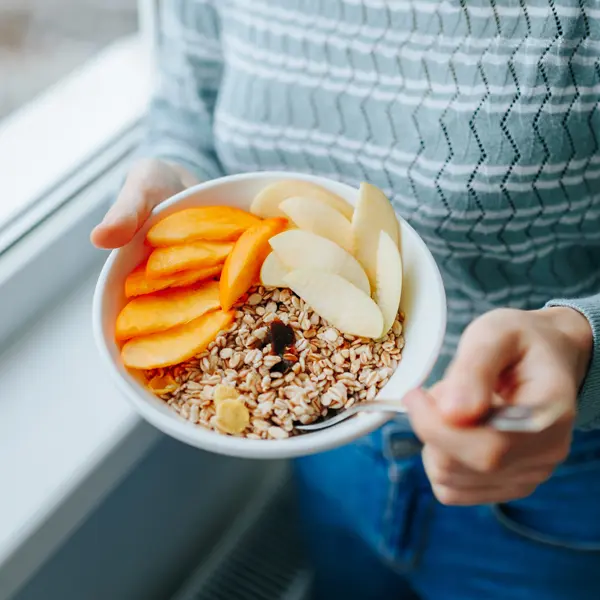
Take the first step toward less visceral fat and better sleep by paying closer attention to how much fiber you get each day. Aside from eating fiber-rich food like apples, corn, sweet potatoes, spinach, and lettuce,13 ask your doctor about including Glucopro® in a daily health routine.
Together with proper diet and exercise, this water-soluble, non-gelling, and wintermelon tea-flavored product contains resistant maltodextrin, a type of dietary fiber that may help:14
- Improve gut health by:
- Stimulating the production of a prebiotic in the form of short-chain fatty acids (SCFAs)15
- Increasing the number of good bacteria in the gut16
- Promoting intestinal regularity17
- Assist with healthy weight management by:
- Promoting intestinal regularity17
- Decreasing visceral fat18
- Manage blood sugar spikes after meals19
Ideally, take a total of three Glucopro® sachets daily to receive 16.2 grams of fiber that can help Filipino adults 19 years old and above meet the daily dietary fiber requirements of 20 to 25 grams, as highlighted in the Philippine Dietary Reference Intakes (PDRI).20 To take this supplement, dissolve a sachet in a 250 mL glass of water and consume alongside meals.14
Use Glucopro® under medical supervision. It is always best to consult a doctor prior to taking any form of supplements.
Glucopro® is available in drugstores nationwide and online via Lazada and Shopee.
MAHALAGANG PAALALA: ANG GLUCOPRO® AY HINDI GAMOT AT HINDI DAPAT GAMITING PANGGAMOT SA ANUMANG URI NG SAKIT.
- About sleep. (2024, May 15). Sleep. Retrieved November 17, 2025, from https://www.cdc.gov/sleep/about/index.html
- Frysh, P. (2024, April 8). Visceral fat: What is it? WebMD. Retrieved August 15, 2025, from https://www.webmd.com/diet/what-is-visceral-fat
- Visceral fat. (2022, September 12). Cleveland Clinic. Retrieved August 15, 2025, from https://my.clevelandclinic.org/health/diseases/24147-visceral-fat
- Giannos, P., Prokopidis, K., Candow, D. G. et al. (2023). Shorter sleep duration is associated with greater visceral fat mass in US adults: Findings from NHANES, 2011–2014. Sleep Medicine, 105, 78–84. https://doi.org/10.1016/j.sleep.2023.03.013
- Liu, C., Qiu, L., Wang, T. et al. (2025). Association between visceral adiposity index and sleep disorders among the U.S. adults: a cross-sectional study. Frontiers in Neurology, 16. https://doi.org/10.3389/fneur.2025.1540182
- Reang, T., Goswami, B., Sarkar, S. et al. (2020). Role of body visceral fat in hypertension and dyslipidemia among the diabetic and nondiabetic ethnic population of Tripura—A comparative study. Journal of Family Medicine and Primary Care, 9(6), 2885. https://doi.org/10.4103/jfmpc.jfmpc_187_20
- Al-Hussaniy, H. A., Alburghaif, A. H., & Naji, M. A. (2021). Leptin hormone and its effectiveness in reproduction, metabolism, immunity, diabetes, hopes and ambitions. Journal of Medicine and Life, 14(5), 600–605. https://doi.org/10.25122/jml-2021-0153
- Sweatt, S. K., Gower, B. A., Chieh, A. Y. et al. (2018). Sleep quality is differentially related to adiposity in adults. Psychoneuroendocrinology, 98, 46–51. https://doi.org/10.1016/j.psyneuen.2018.07.024
- Davis, J. N., Alexander, K. E., Ventura, E. E. et al. (2009). Inverse relation between dietary fiber intake and visceral adiposity in overweight Latino youth. American Journal of Clinical Nutrition, 90(5), 1160–1166. https://doi.org/10.3945/ajcn.2009.28133
- Kitagawa, M., Nakagawa, S., Suzuki, T. et al. (2020). Visceral Fat-Reducing Effect and Safety of continuous consumption of beverage containing resistant maltodextrin: a randomized, Double-Blind, Placebo-Controlled, Parallel-Group clinical trial. Journal of Nutritional Science and Vitaminology, 66(5), 417–426. https://doi.org/10.3177/jnsv.66.417
- Jovanovski, E., Mazhar, N., Komishon, A. et al. (2019). Can dietary viscous fiber affect body weight independently of an energy-restrictive diet? A systematic review and meta-analysis of randomized controlled trials. American Journal of Clinical Nutrition, 111(2), 471–485. https://doi.org/10.1093/ajcn/nqz292
- Parikh, S., Pollock, N. K., Bhagatwala, J. et al. (2012). Adolescent Fiber Consumption Is Associated with Visceral Fat and Inflammatory Markers. The Journal of Clinical Endocrinology & Metabolism, 97(8), E1451–E1457. https://doi.org/10.1210/jc.2012-1784
- High-Fiber foods. (2024, October 15). Cancer.gov. Retrieved August 15, 2025, from https://www.cancer.gov/about-cancer/treatment/side-effects/nutrition/high-fiber-foods
- Glucopro® Product Information Leaflet. Date of Revision 11 Nov 2021.
- Astina, J., & Sapwarobol, S. (2018). Resistant maltodextrin and Metabolic Syndrome: a review. Journal of the American College of Nutrition, 38(4), 380–385. https://doi.org/10.1080/07315724.2018.1523028
- Baer, D. J., Stote, K. S., Henderson, T. et al. (2014). The metabolizable energy of dietary resistant maltodextrin is variable and alters fecal microbiota composition in adult men. Journal of Nutrition, 144(7), 1023–1029. https://doi.org/10.3945/jn.113.185298
- Burns, A. M., Solch, R. J., Dennis-Wall, J. C. et al. (2018). In healthy adults, resistant maltodextrin produces a greater change in fecal bifidobacteria counts and increases stool wet weight: a double-blind, randomized, controlled crossover study. Nutrition Research, 60, 33–42. https://doi.org/10.1016/j.nutres.2018.09.007
- Hashizume, C., Kishimoto, Y., Kanahori, et al. (2012). Improvement Effect of Resistant Maltodextrin in Humans with Metabolic Syndrome by Continuous Administration. Journal of Nutritional Science and Vitaminology, 58(6), 423–430. https://doi.org/10.3177/jnsv.58.423
- European Food Safety Authority. (2011, April 8). Resistant maltodextrin related health claims. https://www.efsa.europa.eu/en/efsajournal/pub/2070
- Gumaru, M. (n.d.). Philippine Dietary Reference Intakes (PDRI). FNRI Website. https://www.fnri.dost.gov.ph/images/images/news/PDRI-2018.pdf

Let your circle know about this article



Did you know that fiber plays an essential role in reducing cholesterol levels? Find out how these fiber-packed recipes can help boost your heart health.


Not sure if your blood sugar is too high? Discover nine common symptoms of high glucose levels and what they mean for your health.

Checking your blood sugar levels after eating is key to understanding metabolic health. Learn the normal range and how to avoid dangerous spikes here.
-4637.webp)
Sugar is a major cause of obesity and chronic illnesses. The good news? There are steps that can help you reduce sugar intake. Learn about them here.

In 1987, Pharex then shifted to marketing and distributing generic products, while appointing Metro Drug as its exclusive brand distributor. This move proved to be timely because of the passing of the Generics Act of 1988. Many successful years followed, and in 2016, Pharex was acquired by RiteMED Inc. Even after more than 35 years in the industry, Pharex remains committed to empowering Filipino families by providing them with top-notch healthcare solutions.
More on Pharex here

27th Floor Greenfield Tower, Mayflower St. Corner Williams St., Highway Hills, Mandaluyong City


For other questions, please contact us at (02) 7971-3333 or at productsafetyph@pharexhealth.com
